There is no doubt that medication — including hormone therapies — can, on average, provide some support for the natural decline in testosterone production during menopause. However, these treatments often come with unwanted side effects or lead to new health concerns. That’s why it makes sense to first explore all possible natural, non-pharmaceutical, and preventive strategies.
One often overlooked factor that accelerates the degeneration of genital tissues — not only in women but also in men — is our increasingly sedentary lifestyle.
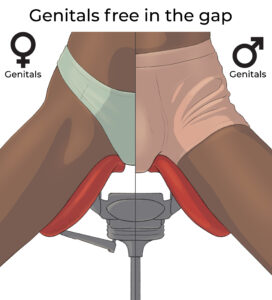
When we sit with our body weight resting on the pelvis, both blood and lymphatic circulation in the pelvic area are significantly reduced. This inevitably compromises the health of tissues in the genitals, pelvic floor, and even deeper pelvic structures, where sitting pressure is distributed through the soft tissues of the pelvic outlet.
Simple lifestyle adjustments, such as standing up regularly and — more effectively — sitting on a middle gap saddle chair, can help restore circulation in the pelvic region. These methods promote healthier tissue function in the genital area and may slow age-related degeneration.
Other important factors include microvascular health, balanced nutrition, physical activity, and even the frequency of sexual activity — all of which play a role in maintaining genital vitality and overall well-being.
Unfortunately, many healthcare professionals do not recommend preventive tools like regular sitting breaks, split-seat saddle chairs, or non-restrictive clothing around the pelvis — even though their physiological benefits are clearly supported by basic anatomical principles.